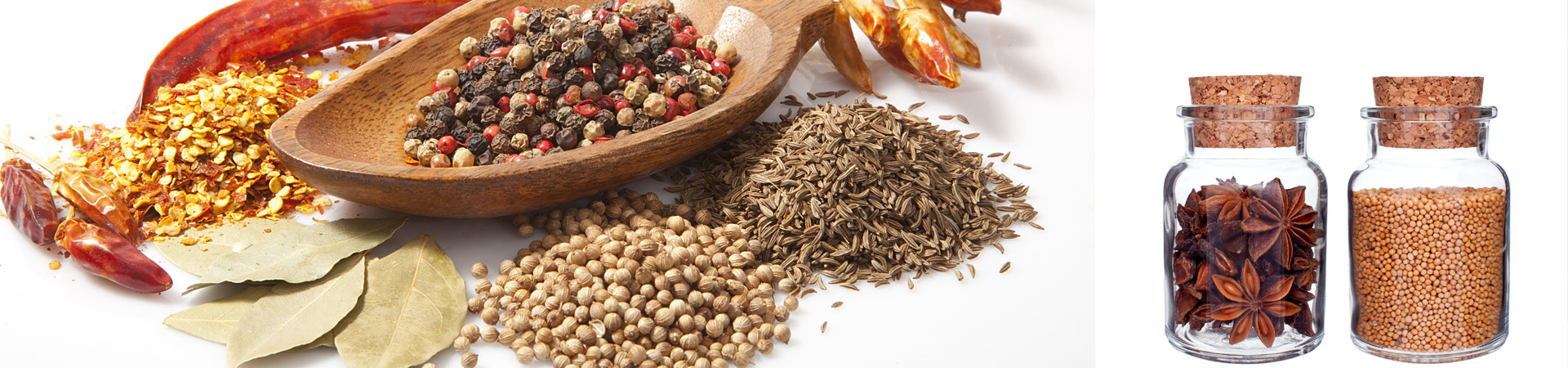
Star
anise is an indispensable spice in global culinary and food processing, famous
for its rich aromatic flavour and unique sweet taste. Widely used in stews,
marinades, beverages, and traditional seasoning formulas, authentic edible star
anise (*Illicium verum* Hook.f.) is safe for human consumption with natural
aromatic properties. However, **Japanese star anise**, scientifically named
***Illicium anisatum* L.**, also cited in older botanical literature under its
synonym *Illicium japonicum* Sieb., is a highly toxic lookalike that closely
resembles edible star anise. Misidentification and accidental consumption can
trigger severe poisoning symptoms, including vomiting, convulsions, and
permanent nervous system damage. For food traders, catering practitioners, and
daily consumers, mastering reliable identification methods is essential for
food safety.
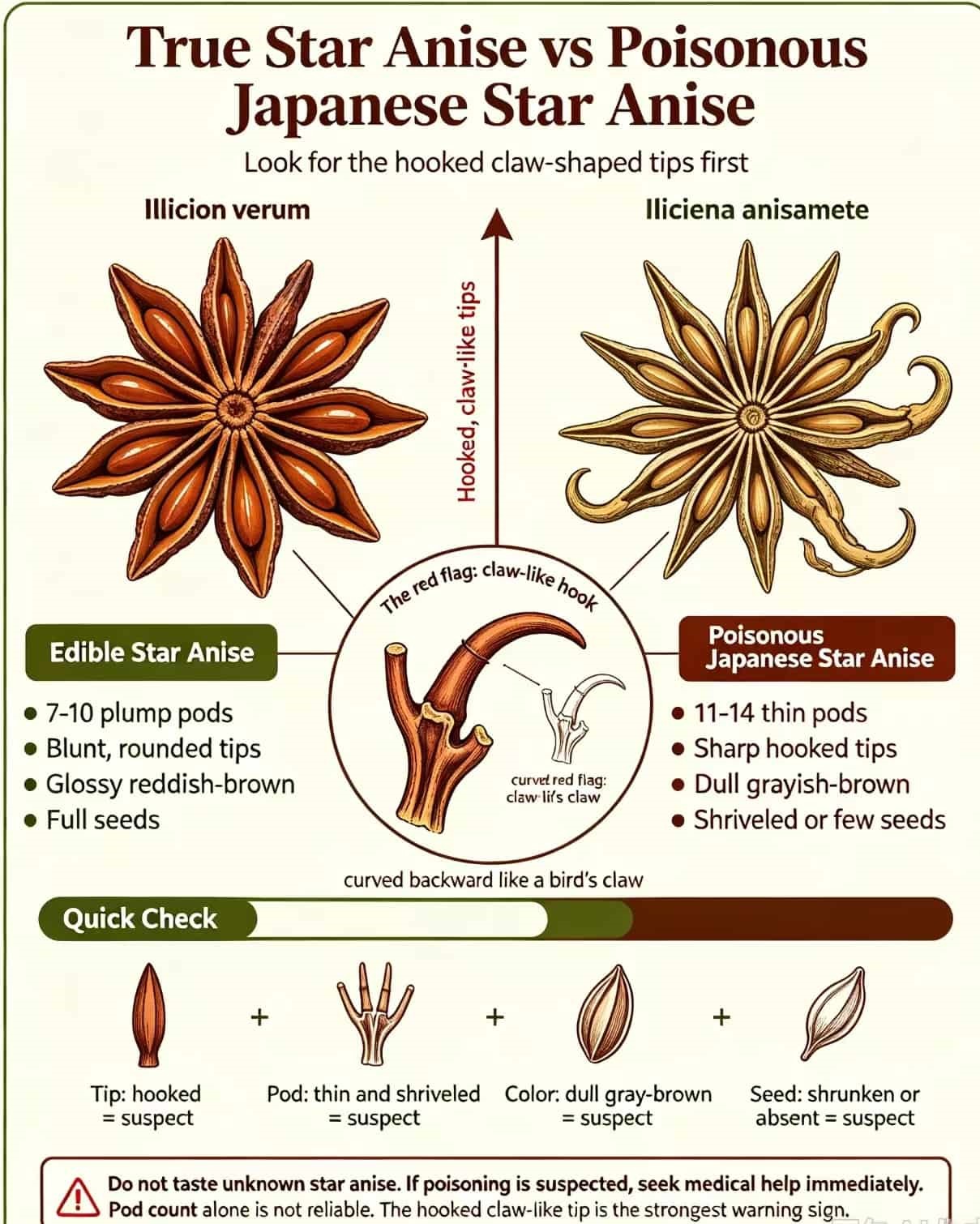
The
core confusion between the two varieties stems from their similar star-shaped
pod structure, yet detailed physical characteristics, aroma, and structural
features have distinct differences summarised by food safety authorities. The
first and most intuitive identification method is observing pod quantity and
shape. Authentic edible star anise typically has **7 to 10 plump pods, with 8
pods being the most standard form**. Each pod is full, smooth-edged, and
features a blunt, rounded tip without hooks. In contrast, toxic *Illicium
anisatum* generally grows **11 to 14 thin pods, mostly 13**. Its pods are
slender, shriveled, and uneven in size, with sharp, hook-shaped tips that curl
backward like eagle claws, forming a jagged outline.
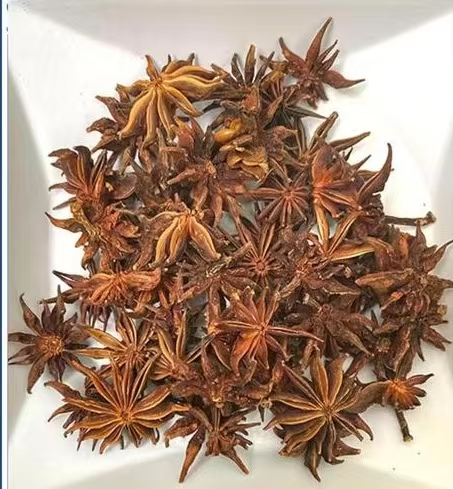
Colour
and internal seed status serve as secondary reliable judgment criteria. Real
star anise presents a glossy reddish-brown or deep brown appearance with
obvious natural luster after proper drying. Most pods crack slightly when
mature, exposing full, round, dark brown seeds inside, with one plump seed per
pod on average. Conversely, Japanese poisonous star anise (*Illicium anisatum*)
is dull greyish-brown or pale tan with no surface gloss. Its pods remain
tightly closed and rarely crack open. The internal seeds are extremely
shrunken, hollow, or completely absent, showing a dry and barren state with no
full granular texture.
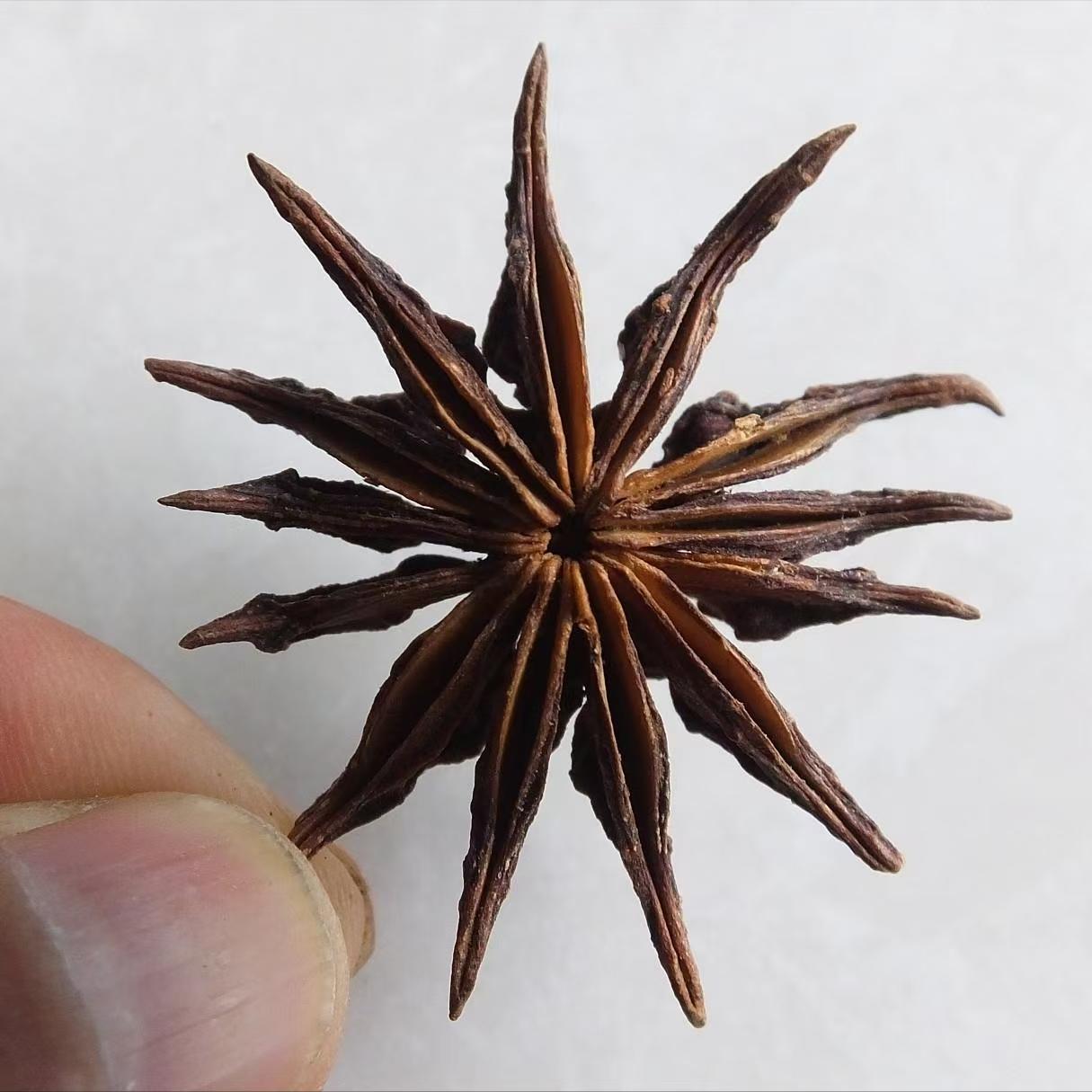
Pod
stalk and aroma differentiation can further eliminate misjudgment. Edible star
anise has a long, soft, naturally curved stalk. It emits a strong, pure, sweet
anise fragrance—the classic warm spice scent familiar in cooking. A tiny taste
delivers a mild sweet flavour with no pungency. Toxic *Illicium anisatum* has a
short, straight, stiff stalk. Its smell is faint and unpleasant, mixed with
camphor or pine odour, lacking the sweet aromatic notes of genuine star anise.
Tasting even a small amount brings a sour, bitter, or numbing sensation, a key
warning sign of toxicity.
Many
people make the mistake of judging authenticity merely by the eight-pod
standard. In fact, natural *Illicium verum* may have 7, 9, or 10 pods due to
growth differences, which does not mean it is toxic. The decisive features are
**blunt pod tips, plump pods, glossy colour, sweet aroma, and full seeds**.
Japanese toxic star anise (*Illicium anisatum*, syn. *Illicium japonicum*),
regardless of pod count, always has sharp hooked tips, shriveled texture, dull
colour, and peculiar odour.
Food
safety reminders are crucial for daily application. *Illicium anisatum*
contains anisatin, a potent neurotoxin that cannot be removed by boiling,
frying, or high-temperature cooking. Long-term intake or accidental large-dose
consumption may cause chronic nerve damage and gastrointestinal failure. It is
worth noting that toxic star anise is sometimes mixed into bulk low-cost spices
to reduce costs, common in informal spice markets across Asia.
In
conclusion, accurate identification relies on comprehensive observation of
shape, colour, seeds, stalk, and aroma, rather than a single feature. Mastering
these simple and efficient discrimination skills helps consumers avoid toxic
spices, while enabling spice industry practitioners to strictly control product
quality, eliminate safety hazards, and ensure standardized and safe spice
circulation in the global market.
Dear friends, if you are interested in star
anise, please feel free to write to our company:
Contact Person: Michael
EMAIL: michael@pnp6.com
Phone: +86-771-5471096
CELL: 18074804455
WEBSITE: http://www.pnp6.com
Tel: 18074804455
Mailbox: pnp6@pnp6.com
URL: http://www.pnp6.com
Address: ADD: TENGKOU WAN, GROUP ONE, HUANGCUN VILLAGE, LING JING TOWN, TENG COUNTY, WUZHOU, GUANGXI,CHINA